If you have read that white tomatoes contain very little of the compounds they are sold for, that is a fair thing to have read — and for the fruit sitting in a bowl, it is broadly true. Which is exactly why the question worth asking is not about the fruit at all.
01 — The fruit
Buying in Malaysia? White Tomato Supplement Malaysia — who sells what, the four checks worth making, and where to buy.
In Singapore? White tomato supplements in Singapore, compared — form, dose, delivery and certification, side by side.
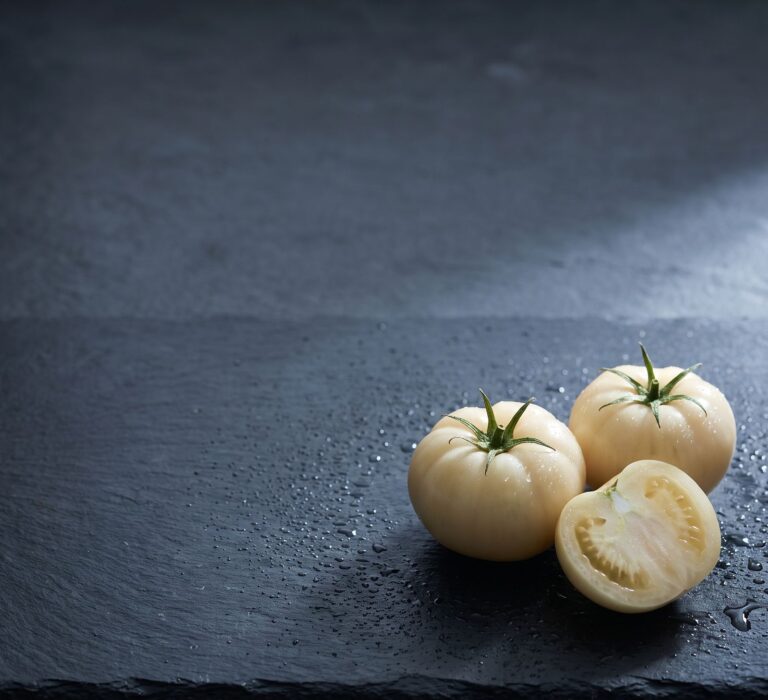
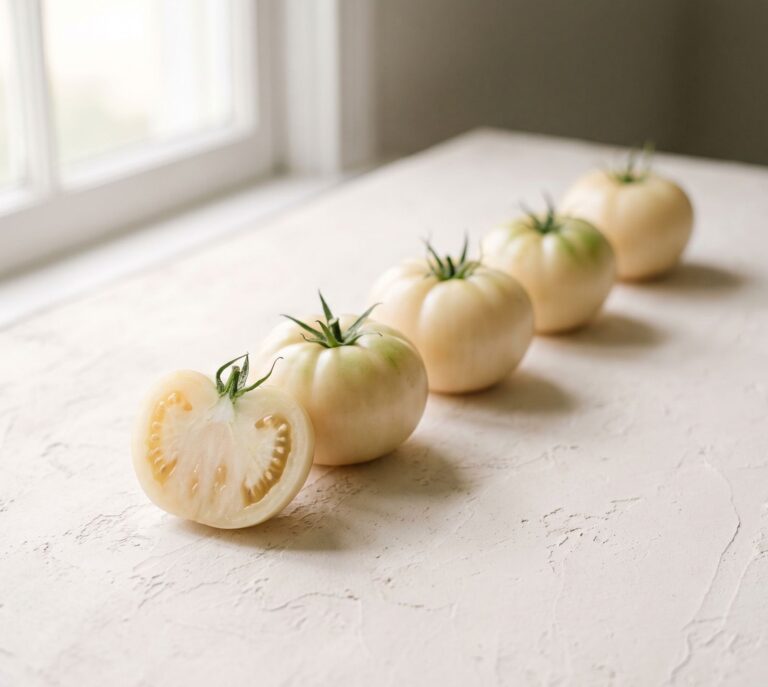
Eating a white tomato does very little. That is not the claim.
Phytoene and phytofluene are fat-soluble, and inside the fruit they sit locked within plant cell walls. Eat a white tomato and most of them pass straight through you. Nobody sells the fruit as a skin ingredient, and anyone who did would be overselling it.
The interesting property is not how much sits in the tomato. It is what the two compounds absorb: phytoene peaks near 287 nm, in the UVB range, and phytofluene near 348 and 366 nm, in long-wave UVA. They are colourless because they take nothing out of the visible spectrum — the colour is the tell, not a defect.
The absorption figures and what the published human research measured are set out in White Tomato Science.
02 — The extract
Standardised extract and dried fruit powder are not the same product
A standardised extract is concentrated to a declared amount of the compound you are buying. Dried fruit powder is the fruit, dried. Both can legally be called white tomato on a label, and the difference between them is the difference between a stated dose and a hope.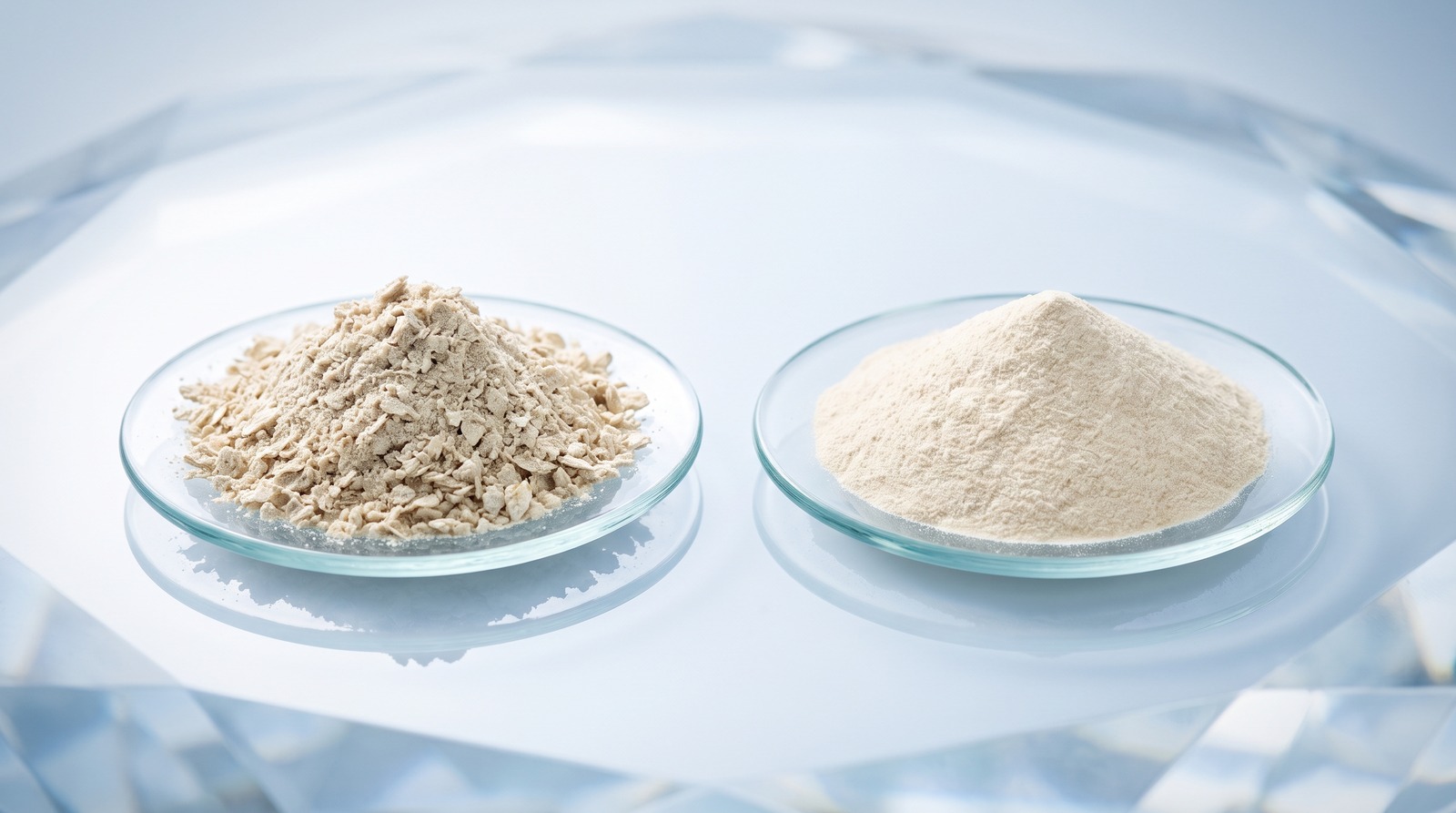
So the first question to ask any brand is simply: how many milligrams, and of what? If the answer is a proprietary blend, there is no answer. Lipo Crystal declares 500 mg of Herbosomal® white tomato extract in each 3 g sachet, printed on the carton, alongside 600 mg of liposomal vitamin C.
03 — The delivery
A number on the pack only counts if it arrives
This is the part the “white tomato does nothing” argument usually skips. Carotenoids are fat-soluble, so stirring a plain powder into water leaves most of the dose with nothing to carry it across the gut wall. The standard workaround is to take carotenoids with dietary fat, which works — and quietly makes the result depend on what else happened to be on your plate.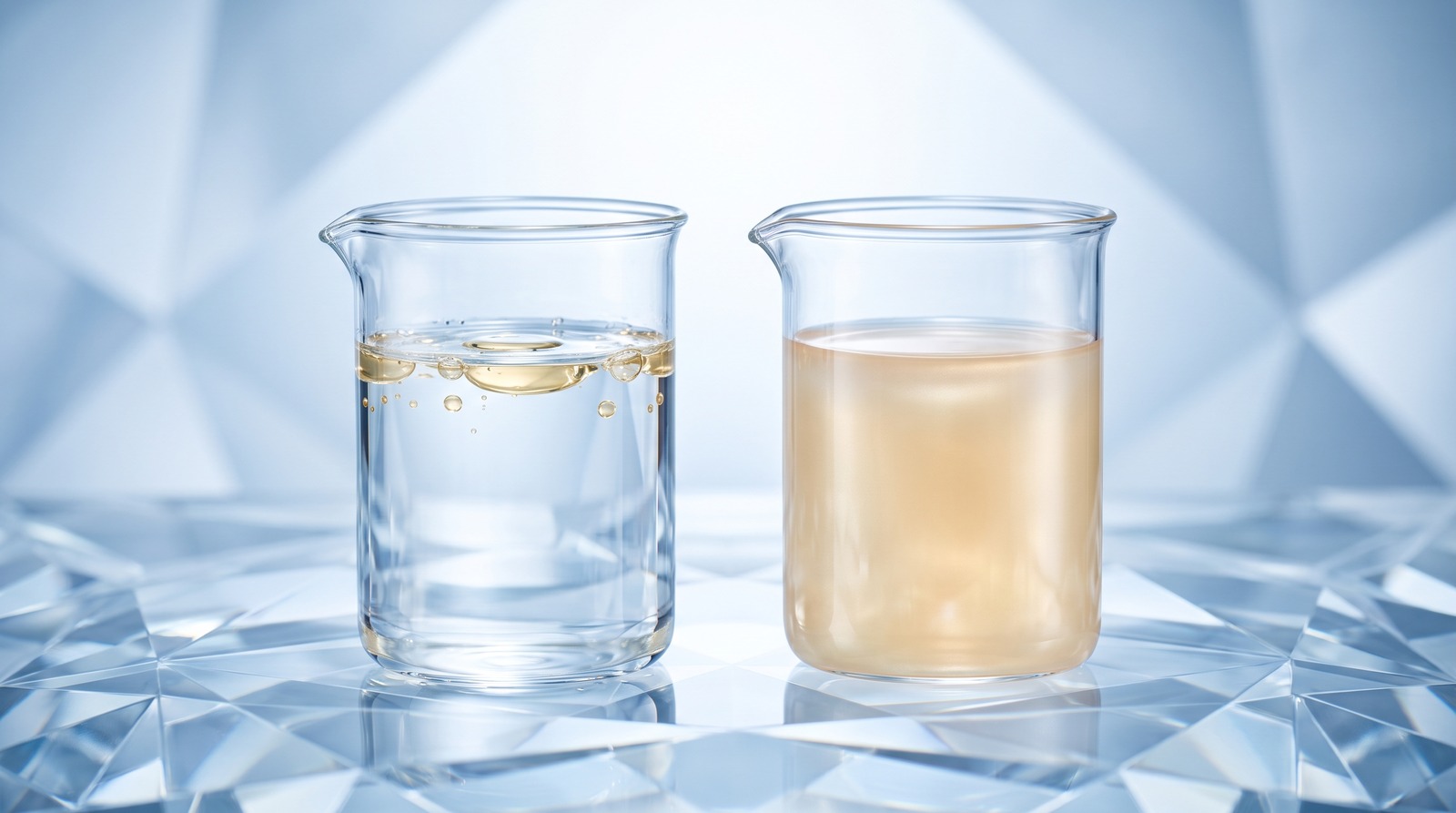
A phospholipid carrier builds that fat in, so the dose does not hinge on your last meal. That is what Herbosomal® is for. It is a delivery system, not an active ingredient, and it is worth being precise about the difference: it does not make the compounds do more, it gives more of them the chance to arrive.
Read the full account of the delivery technology in White Tomato Science, or the laboratory data on the finished formula in The Laboratory Data, in Full.
04 — What we can and cannot show
Laboratory testing, stated plainly
The finished Lipo Crystal formula was tested at the School of Pharmacy, Lincoln University College. In that testing it inhibited tyrosinase — the enzyme that starts melanin production — by 93.82% at the concentration assayed.
That figure is laboratory testing, not a clinical trial. It shows the formula is biochemically active in a dish. It does not measure what happens on a person’s face, and we will not present it as if it did. Separately, published human studies on colourless carotenoids report a rise of roughly 10 to 20 percent in the minimal erythema dose — how much UV skin tolerates before reddening — over 12 weeks. Those are two different kinds of evidence, and both are worth stating for what they are.
05 — How to check anyone
Four questions that settle it without trusting an advertisement
| Ask | Why it decides the answer |
|---|---|
| How many mg, printed on the pack? | A proprietary blend means the dose is not disclosed. You cannot compare what is not stated. |
| Standardised extract or fruit powder? | Both are labelled “white tomato”. The concentrations are not comparable. |
| Is there a delivery system? | A fat-soluble compound taken in water largely does not arrive, whatever the label says. |
| Does any testing name the institution? | “Clinically proven” with nothing behind it is not checkable. A named laboratory is. |
Those four apply to every brand on the shelf, ours included. If a product passes all four, it is a serious product whether or not it is this one.
06 — Common questions
What people ask next
For the fruit as you would eat it, that is broadly fair — the compounds are fat-soluble and locked inside plant cell walls, so most of what is there never gets absorbed. A supplement is not the fruit. It is a standardised extract concentrated to a declared milligram amount, and the useful question is what that amount is and whether it survives digestion.
The interest is narrow and specific: phytoene and phytofluene absorb ultraviolet rather than visible light, and published human studies on colourless carotenoids report roughly a 10 to 20 percent rise in the minimal erythema dose over 12 weeks. That is a change in the skin’s own baseline tolerance to UV, measured over months. Brighter, more even tone comes from making less new pigment over time, and this works alongside your sunscreen rather than instead of it.
Phytoene and phytofluene are carotenoids that occur in ordinary food, and published human studies at the doses tested did not report serious adverse effects. What matters more in practice is the rest of the formula: check the label for anything you react to. Anyone pregnant, breastfeeding or taking prescribed medication should speak to a doctor before starting any supplement.
500 mg of Herbosomal white tomato extract per 3 g sachet, printed on the carton rather than hidden in a proprietary blend, together with 600 mg of liposomal vitamin C. The full ingredient table and the current price are on the product page.
Lipo Crystal is a food supplement, not a medicine. It is not intended to diagnose, treat, cure or prevent any disease. Results vary between individuals and build gradually. It is not a sunscreen — keep wearing SPF.