Bromelain is not one enzyme. It is a family of protein-digesting enzymes found in pineapple, concentrated in the stem, and it is one of the few plant extracts with a genuine stack of randomised human trials behind it. Those trials are about swelling, pain and inflammation — not about skin. This page explains why it is in a skin formula anyway, and what the trials actually measured.
01 — The ingredient
What bromelain is
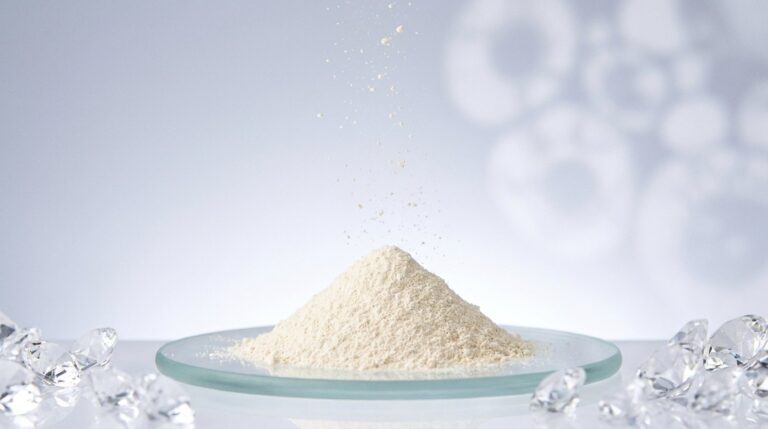
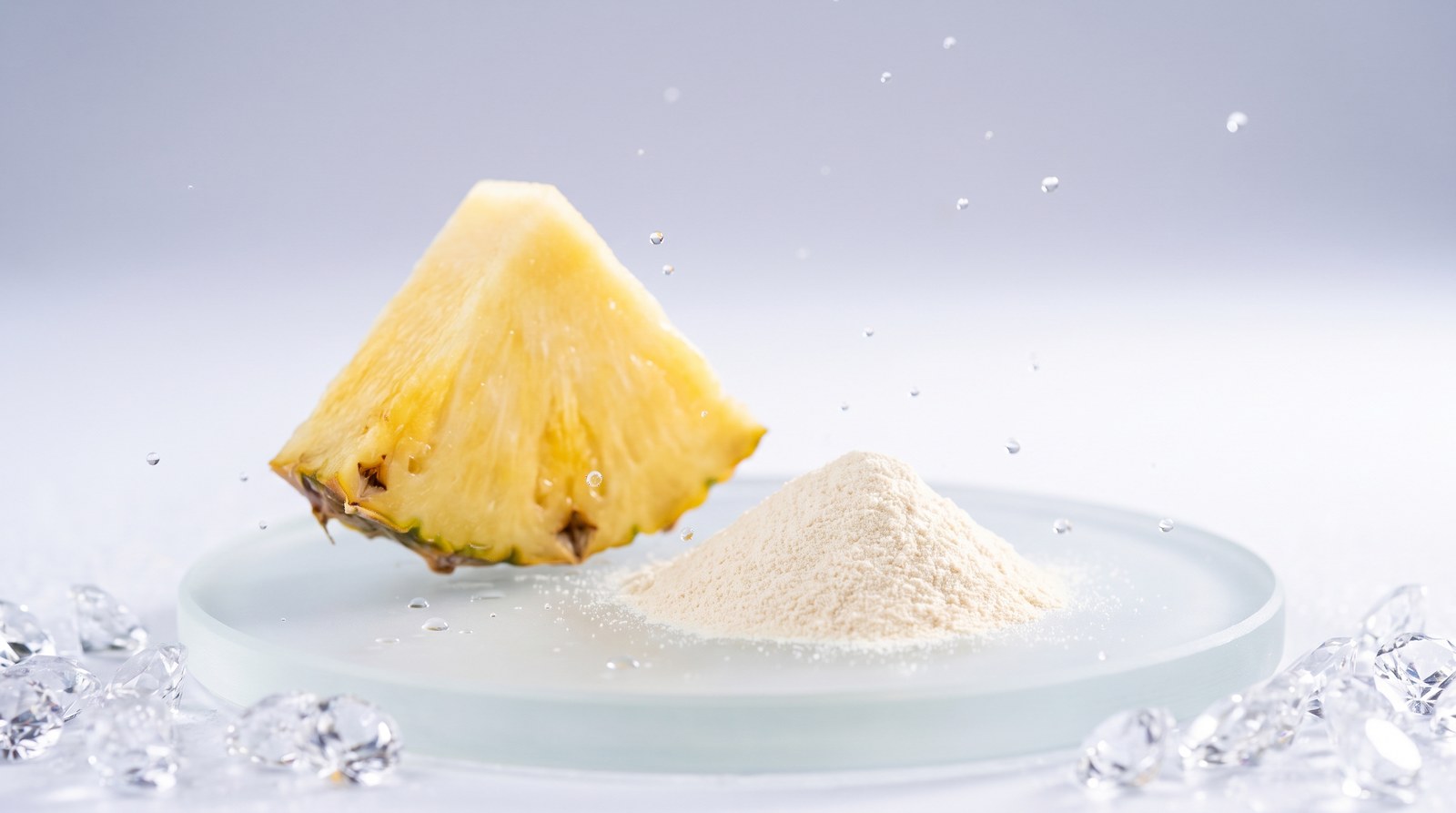
Cut a pineapple and the enzymes that make your tongue tingle are bromelain doing what it does: breaking peptide bonds. Commercially it is extracted mostly from the stem, the fibrous core that is not eaten, and dried into a powder.
The important quirk is how it is measured. Bromelain is quantified by enzyme activity — in GDU (gelatin digesting units) or FIP units — not by weight. Two powders of identical mass can differ several-fold in activity. This is why activity units tell you more than milligrams, and why two labels showing the same number can be very different products.
02 — The evidence
What the trials measured
Unusually for a plant extract, most of the good bromelain research is in humans, and most of it is surgical or clinical rather than cosmetic.
- Third-molar surgeryIn a prospective double-blind trial, patients given bromelain after wisdom-tooth extraction had lower pain, swelling and redness scores at 3 hours, 48 hours and 7 days, and used fewer painkillers than controls.
- Inflammatory markersA systematic review found seven eligible randomised trials. In most of them, bromelain — alone or combined — reduced measured inflammatory parameters.
- Paediatric inflammationA 2025 randomised pilot in children used a bromelain-rich pineapple extract at 400 mg/day of bromelain, and found significantly greater reductions in pain score than placebo at 7 and 15 days.
- Dose rangeAcross the literature, isolated bromelain has been given at 200–1050 mg/day for one to sixteen weeks. Germany’s Commission E monograph recommends 80–320 mg a day, split into two or three doses.
- TolerabilityGenerally well tolerated. Reported side effects are mainly gastrointestinal. In one review cohort, eleven participants reported side effects and two stopped treatment.
Extract, not pure enzyme
A Lipo Crystal sachet contains 1250 mg of bromelain-rich pineapple extract. That is not the same thing as 1250 mg of pure bromelain — a distinction worth applying to any label you read.
The activity figure for this extract, in GDU or FIP units, has been requested from the manufacturer and will appear on the ingredients page when it arrives.
03 — The reasoning
Why an anti-inflammatory enzyme is in a skin formula
The link is not brightness. It is the mark that gets left behind.
When a spot heals, the redness or brownness that stays for weeks afterwards is post-inflammatory pigmentation — pigment laid down as part of an inflammatory response, not as part of a tan. The inflammation comes first; the mark is the consequence. That is the mechanism by which an anti-inflammatory ingredient could plausibly matter to how skin looks, and it is a genuinely different argument from “this ingredient whitens”.
What exists is good evidence that bromelain reduces inflammation where it has been measured, and a clear mechanistic route from that to how marks form. The human research on oral bromelain has been done in surgical and clinical settings rather than dermatological ones.
If you want the skin side of that story, our pages on why acne marks take time to fade and how acne forms set out what actually drives the marks.
04 — Practical
Who should be careful with it
Bromelain is a food enzyme with a long record of ordinary consumption, but a few situations deserve a doctor’s opinion rather than a blog’s:
- Blood thinnersBromelain has been reported to affect platelet aggregation. If you take warfarin, an antiplatelet or any anticoagulant, ask your doctor first.
- SurgeryFor the same reason, tell your surgeon what you are taking before a planned procedure.
- Pineapple allergyStraightforward. If pineapple causes you a reaction, this is not for you.
- Pregnancy and breastfeedingNot enough data for anyone to be confident. Ask a professional.
Lipo Crystal is a food supplement, not a medicine, and is not intended to diagnose, treat, cure or prevent any disease.
Bromelain is a group of protein-digesting enzymes from pineapple. Its strongest human evidence is for reducing swelling, pain and inflammation, particularly after oral surgery, and for lowering measured inflammatory markers. Doses in randomised trials have ranged from 200 to 1050 mg of bromelain per day. It is also used as a meat tenderiser and a digestive aid.
Bromelain’s human research is on swelling, pain and inflammation rather than on skin. The route to skin runs through inflammation: the mark left after a spot heals is post-inflammatory pigmentation, laid down as part of an inflammatory response. That is why an anti-inflammatory enzyme sits in this formula.
Each 3 g sachet contains 1250 mg of bromelain-rich pineapple extract. That is not the same as 1250 mg of bromelain. Bromelain is measured in enzyme activity units rather than milligrams, and the activity figure for this extract has not yet been published. It has been requested from the manufacturer and will be added to the ingredients page when it is available.
Anyone allergic to pineapple. Anyone taking an anticoagulant or antiplatelet medicine should ask their doctor first, because bromelain has been reported to affect platelet aggregation, and the same applies before planned surgery. There is not enough data in pregnancy or breastfeeding for a confident answer, so ask a healthcare professional.