Before you take anything every day, there is one thing worth settling first: is it safe to take? Kura Mynis was put through laboratory safety testing at a Malaysian university school of pharmacy, and this page reports exactly what that testing found — including what it did not find.
01 — Who tested it
Where this testing was done
The work was carried out by the School of Pharmacy, Lincoln University College (Wisma Lincoln, SS 6/12, 47301 Selangor, Malaysia) and reported in January 2026, using cell cultures and a preclinical model, under published international protocols.
This is the stage of testing that exists to answer one question well: is the substance tolerated? It is the standard first step, and the protocols used are the ones laboratories worldwide follow so that results can be compared.
02 — The acute toxicity test
A single dose far above any normal serving
The standard first question in safety testing is blunt: give a large single dose and see what happens. This follows a published international protocol, OECD Test Guideline 423, which exists so that results from different laboratories can be compared.
Kura Mynis was given as a single oral dose at 6,000 mg per kg of body weight. Observation was continuous for the first two hours, then daily for fourteen days.
| What was measured | Result over 14 days |
|---|---|
| Mortality | None |
| Signs of toxicity | None observed |
| Behavioural and motor changes | None observed |
| Body weight, start | 208.43 ± 19.30 g |
| Body weight, day 14 | 215.10 ± 21.82 g |
| Change | +6.67 ± 0.94 g — normal gradual gain |
Acute oral toxicity, OECD 423. Preclinical study, three subjects, 200–350 g body weight.
Twelve observational parameters were checked at two hours, day one and day fourteen: fur and skin, eyes, salivation, respiration, urination, stool consistency, diarrhoea, sleep, itching, motor activity, grip strength, and convulsion or tremor. Every one was recorded as normal or absent at every timepoint, in every subject.
How large is 6,000 mg/kg? It is the upper limit dose used in this class of test — the protocol does not routinely go higher, because a substance that causes no harm at that level is not going to be informative at a larger one.
The useful figure is not a converted number but the margin: the gap between a normal daily serving and a dose that produced no observable effect at all is very wide.
03 — The cell test
What happened to human liver cells
The second test asks a different question: does the formulation damage living human cells when it is in direct contact with them?
This used an MTT assay, a standard laboratory method that measures how many cells in a dish are still alive and metabolically active after treatment. Live cells convert a yellow dye into purple crystals; the deeper the colour, the more living cells there are.
The cells were Hep-G2, a human liver cell line. Liver cells are the right choice here for an obvious reason: the liver processes everything you swallow, so it is the tissue most exposed to anything taken daily.
| Concentration | Cell viability after 24 hours |
|---|---|
| Untreated cells | 100% (reference) |
| 20 µg/ml | 100.25% |
| 40 µg/ml | 99.96% |
| 60 µg/ml | 94.61% |
| 80 µg/ml | 92.66% |
| 100 µg/ml | 91.66% |
MTT assay, Hep-G2 human liver cell line, 24-hour treatment. IC50 not reached within the tested range.
At the highest concentration tested, more than nine in ten cells were still alive. No IC50 was reached — meaning the concentration that would kill half the cells was never found within the range tested. In a cytotoxicity screen that is the result you want: the formulation did not behave as a cell poison.
There is an established benchmark for reading a result like this. ISO 10993-5, the international standard for in vitro cytotoxicity testing, treats a fall in cell viability of more than 30 per cent — that is, viability dropping below 70 per cent — as evidence of a cytotoxic effect. The lowest figure recorded anywhere in this series was 91.66 per cent, comfortably clear of that line.
The shape of the series matters as much as any single number in it. Across a five-fold increase in concentration, from 20 to 100 µg/ml, viability fell by fewer than nine percentage points. A response that flat is what a well-tolerated material looks like in this assay: a substance that was damaging cells produces a curve that bends downwards as the dose climbs, and steepens as it goes. This one stays close to level from the lowest concentration tested to the highest.
One clarification, because it matters. Hep-G2 is derived from a liver cancer and is used worldwide as a standard laboratory stand-in for human liver cells. Its use here says nothing whatsoever about cancer, in either direction. It was chosen because it is the conventional model for liver-cell testing, and that is the only reason.
Download
The safety data, as a document you can keep
Both tables on this page — the acute oral toxicity results and the full cell viability series — together with the limits set out below. Useful if you want to show it to a pharmacist or your doctor.
Download the safety data (PDF)PDF, 2 pages. Prepared by Bykare Sdn Bhd from the preclinical evaluation carried out by the School of Pharmacy, Lincoln University College, January 2026.
04 — The practical answer
So is it safe to take?
Yes. Both tests came back clean, and neither result was marginal. At the upper limit dose of the OECD protocol there was no mortality, no sign of toxicity and no change in behaviour across fourteen days of observation. Human liver cells stayed above 91% viability at every concentration tested — comfortably clear of the 70% line that ISO 10993-5 treats as evidence of a cytotoxic effect, and the concentration that would kill half the cells was never reached.
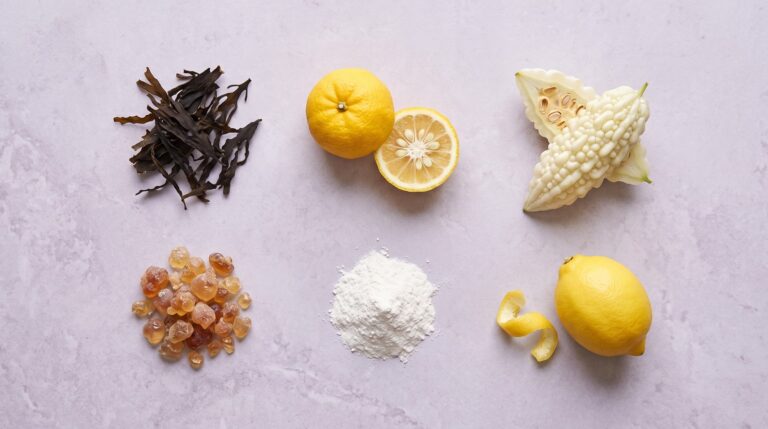
That is what the laboratory found, and it agrees with what the ingredient list would lead you to expect. Kura Mynis is built from food-grade ingredients — a citrus bioflavonoid complex, white bitter melon, yuzu, inositol, acacia gum and InSea2® brown seaweed. Foods and food extracts, not pharmaceutical actives, and people have been eating every one of them for a very long time.
Taken as directed — one sachet before a meal — a healthy adult has no reason to be concerned about it.
The one thing worth doing before you start is checking whether anything in your own situation calls for a word with a professional first. Medication in particular. That list is short, and it is next.
05 — Check first
Who should speak to a doctor or pharmacist first
- Anyone taking medication for blood sugar. This is the important one. If you are on any glucose-lowering medication, do not add or stop anything without your doctor knowing. The risk being managed is your blood sugar going too low, and that is a real risk, not a formality.
- Anyone who is pregnant or breastfeeding.
- Anyone on prescription medication of any kind. Soluble fibre can affect how some medicines are absorbed; ask your pharmacist about timing.
- Anyone with a diagnosed liver or kidney condition.
- Anyone with a seafood or shellfish allergy, because of the brown seaweed component.
- Children. Kura Mynis is formulated for adults.
And if you recognise the warning signs of high blood sugar — persistent thirst, frequent urination, unexplained weight loss, blurred vision, slow-healing wounds — book the appointment and get a blood test. Not instead of Kura Mynis — alongside it. Take it if you want to; just make sure the person looking after you knows you are taking it, and bring the ingredient list with you. What those signs need is a diagnosis, and a diagnosis is the one thing no supplement can give you.
Yes. Kura Mynis is built from food-grade ingredients and has been through laboratory safety testing at the School of Pharmacy, Lincoln University College. A single oral dose of 6,000 mg/kg — the upper limit dose for that protocol — produced no mortality, no signs of toxicity and no behavioural changes across fourteen days of observation, and human liver cells stayed above 91% viability at the highest concentration tested.
One thing worth raising first: if you already take medication for blood sugar, tell your doctor or pharmacist before adding anything alongside it.
Six food-grade ingredients in a single daily sachet: a citrus bioflavonoid complex, white bitter melon, yuzu, inositol, acacia gum and InSea2® brown seaweed. Each of those links goes to a page on what the ingredient is and what the published research on it measured.
No toxic or behavioural effects were observed in the acute oral toxicity test described above. The most likely everyday effect is digestive rather than toxic: Kura Mynis contains soluble fibre, and any increase in fibre intake can cause temporary bloating or wind. Introduce it gradually and drink enough water. Stop and speak to a healthcare professional if anything unexpected persists.
Ask your doctor or pharmacist first, and do not treat that as a formality. If you are already on glucose-lowering medication, anything added alongside it needs to be known to the person managing your treatment, because the risk being watched for is blood sugar dropping too low. Bring the ingredient list to the appointment.
The School of Pharmacy at Lincoln University College in Selangor, Malaysia, in work commissioned by Bykare and reported in January 2026. The same School ran both the acute oral toxicity protocol and the cell viability assay.
Disclaimer. This article is for general information only and is not medical advice. Kura Mynis is a food supplement and is not intended to diagnose, treat, cure or prevent any disease. Individual results vary. Consult a qualified healthcare professional before starting any supplement, particularly if you are pregnant, breastfeeding, taking medication or managing a diagnosed condition.